Author: JDJPlocher

On Writing and Music Performance

“And yes, [writing]’s a performance art – even if you’re writing for yourself – because it’s ultimately also about translating and transferring emotions.”

Do you read MJ Wright? If not, you should consider it. He’s a New Zealand historian and writer who has a lot of smart things to say about writing, history, and science (among other things). Last week, he published a post called “Why writing is a performance art, like concert piano playing.” I have no problem with the thesis of that piece: writing requires practice and, to do it well, you must get beyond “rules.” Experience counts. There’s truth in that, but that much is true of any art. I’m less curious about why Wright compared writing to piano performance than I am with the semantic leap from “translating and transferring emotions” to “performance.”  Where does the composer fit into the equation? Where, for that matter, does a reader?

I’m in a rare position regarding this question: I’ve written lots of text, I’ve written lots of music, and I’ve put in my time performing music (and on much rarer occasions, words). A caveat, though: Wright’s post was just a springboard for this one. I’m not trying to “refute” his argument or really even comment on the post’s content. Said post makes a convincing case for the importance of practice in writing, and I wholly agree with Wright on that point. My quibble is with “performance” and just how well that idea applies to writing.

“If you play one of the classics, let’s say Beethoven’s Piano Sonata No. 14 in C sharp minor, ‘Moonlight’, strictly according to the notation, it sounds plonky and stupid.”

This is true. It’s also true, though, that Western music notation has always been a kind of shorthand—there’s a whole branch of music scholarship devoted to studying manuscripts and decoding the actions the blobs of ink were meant to prompt. (If you’re interested in some of the uses and abuses of ‘performance practice’ studies, I’d suggest Richard Taruskin’s Text and Act, though I’d also suggesting looking directly at some of the essays he engages with. Taruskin habitually pursues his arguments…aggressively.)

It wasn’t really until the 19th century that “composer” became a job of its own. Prior to that, writing music was a part of other jobs—Kapellmeister, for example. The Kapellmeister managed all the musical activity for a church and wrote more as necessary for performance. As the patronage system broke down and professional music-making moved away from the church and the estates of the aristocracy, composers stopped having house or church ensembles to work with. Simultaneously, music came to be treated more as an art than a craft.

Notation was getting more precise, too, because composers were less likely to be in direct control of performances. Dynamic markings (for loudness) grew in importance. Composers indicated tempi, eventually with metronome markings. Articulation marks and phrasing marks and all sorts of indications telling a performer how to play a particular note became common. The more seriously composition was treated as its own distinct art, the more precisely composers worked to guide (or control) performers.

By the middle 20th Century, this had pushed some composers to abandon performers altogether. Electroacoustic music was driven by new sounds and new technology, but it also allowed the composers to create exactly what they wanted to without the necessary mediation of a performer. Some composers—famously, Igor Stravinsky—railed against performers’ “interpretation” of music, instead preferring “execution.” The ladies and gentlemen with the instruments in hand were, Stravinsky argued, just there to make his artistic vision a reality, without any input on the process.  They had acquired a history’s worth of bad performance habits that needed to be scrubbed away. (See the sixth of his Norton lectures at Harvard, published in Poetics of Music in the Form of Six Lessons.)

To bring this back around to Wright, of course playing Beethoven as if the blots on the page were the whole piece sounds “plonky and stupid.” The score was never intended to be the music, only a vehicle for transmitting it.[1]

Embed from Getty Images

And here the comparison of music to writing gets fuzzy, because writing is also a vehicle for transmitting ideas. We use the written word to tell stories, to explain scientific research, to philosophize, to do a hundred hundred other tasks. The words, though, are not the stories, are not the ideas, are not the philosophy. (You can make a case for that, but that’s a rabbit hole for another day.) Stories live closer to the words than music does to the score, but there’s still a significant degree of difference.

The gap between (Western) music and writing comes in the way that gap between sign and signifier is bridged. With words and ideas, it’s essentially a direct process of semiosis.[2] With traditionally-notated Western music, you need a performer and some kind of semiosis to accomplish Wright’s “translating and transferring emotions;” the semiosis is mediated by the performer. The performer translates the score into reality—that’s performance. Like translating from one language to another, though, there are necessary injections of the performer’s ideas into the final product—the difference between dumping a chunk of text into Google Translate and using a professional translator is much the same as the difference between “plonky and stupid” Beethoven and the performance by Tiffany Poon Wright uses as his counterexample.

You can make the case (as reader-response theory sometimes does) that the “translation” of words into a story or idea—into meaning—is a kind of performance by the reader rather than the writer. It is the reader who controls the pace of consumption, who consciously or unconsciously glides over the boring bits or lingers on a particularly artful turn of phrase. Readers are, at the least, participants in the construction of the meaning of a text. Communication is between the author and the reader.[3]

Musical performance—as with other performance arts—takes place in time. Scores can and do hang around for centuries. What we have on the page of Beethoven’s Op. 27 No. 2 now isn’t much different than what was on the page 200 years ago, but to turn it into music we need a performance now, something to thaw Beethoven’s calcified intentions into flowing sound. By controlling the pace of production (of sound), the performer controls the pace of consumption. The performer, of course, also controls the innumerable nuances that create the music for the audience.

“The trick is to infuse unwritten expression into the piece – something that has to be created by the performer, and which was always envisaged by the composer.”

As a composer, I have to respect performers—their skills make my ideas reality (and often improve upon them in the process). I don’t agree with Stravinsky’s notion of a hierarchical, unidirectional movement from composer to performer to audience. I believe that the relationships are reciprocal and that the musical work exists somewhere in the vague middle of the performer-audience-composer triangle. Performing is creative work regardless of how much or how little the composer has written down. (Any quibble with “which was always envisaged by the composer” must be saved for a separate post.) It’s the composer, though, who takes the first step of creating something from nothing, of recording some idea or intention to give to a performer and ultimately to the audience. That stage of creation embeds Wright’s “emotions” (I would add “ideas,” too) in an artifact. Only then can the performing artist “transfer and translate” them for the audience.

Writing is creating something from nothing. Performing a score is creating something out of something else. That doesn’t mean that writing and music are wholly discrete: words are sounds. Sentences have rhythm. We can talk about pace and tempo and structure in novels in much the same way we do in symphonies. One of my favorite composers (and subject of my master’s thesis) justified his musical style and the creation of a whole new tuning system on the basis of its presumed relation to human speech and song—to embodied words.

My favorite description of what defines a story is the Kalahari proverb “it comes from a far off place and you feel it.” Music is much the same way. I’ve been thinking about and writing about both for years. They’re arts. They benefit from from practice. Sometimes you create texts or scores or performances that suck. You learn from them and you move on. That doesn’t make writing  performance, and that’s okay. [4] Go practice, go write and, as Neil Gaiman puts it, make good art.

1—It’s tangential but important to note that the majority of the world’s musical traditions lack notation altogether. We have to be careful when we talk about music to remember that there is more to it than Western “classical” music. Many Western music philosophers and music semioticians build their work entirely on the Western canon, sometimes narrowing it further to Western instrumental music. That leads to some conclusions that look truly idiotic the moment you step out of the concert hall.
2—…and semiosis is marvelously complicated even before you get neurocogs involved.
3—As somebody whose dissertation was on the presentation of music and all of the practical levels of execution that go with getting music composed and performed, that sentence was a little painful to write. The communication is never going to be perfect and, as soon as publishing enters the equation, you add all sorts of competing pulls that influence both what is said and how it is said.
4—And, as I mentioned at the beginning, the fact that I don’t believe writing is performance does nothing to discount the other elements of Wright’s analogy. Writing is still art!
Nicking from Novels: Tony DiTerlizzi’s WondLa Trilogy

If Tony DiTerlizzi’s  work had begun and ended with the art for the old Planescape boxed set, he’d still have a special place in my heart. Fortunately for all of us, it didn’t. He’s gone on to create books of his own—art and otherwise. The Spiderwick Chronicles (in collaboration with Holly Black) are probably the best known thanks to a movie that I haven’t seen and haven’t heard anything good about. They’re good. (I only just learned that he and Ms. Black wrote a second set of Spiderwick books, which will be coming home from the library a few at a time for me and the kids.)

Today, though, I want to write about his juvenile sci-fi/fantasy novels, the WondLa trilogy. (They’re now available in paperback!)

The Overview
Stranger in a stranger land. A world full of aliens, exotic wildlife, and strange technology. Color art plates at the beginning of each chapter. A young protagonist who must save the world from itself while learning to understand her own power. Ecology. Third person limited point of view, with some important events happening off camera. Fairy tale elements combined seamlessly with sci-fi.

The Plot
Eva Nine lives underground with Muthr, her robot mother. An invader destroys the sanctuary and sets Eva on a course of discovery and self-discovery. She befriends an alien named Rovender Kitt, hears a prophecy, and finds her WondLa. In the subsequent volumes, she meets her people, tries to prevent a war, and eventually saves the world through bravery and kindness.

The Cool Thing to Consider
First, an aside: if I had tens of millions of dollars to throw at imaginary art projects, I would get Studio Ghibli and DiTerlizzi to make this trilogy into a movie. (It could be compressed into one or two movies without losing too much, I think.) It has the right environmental overtones, a young female protagonist, flying machines… The story sits comfortably in amongst Castle in the Sky, Nausicaa, Spirited Away, and Mononoke. It would be awesome. (And WondLa is probably easier to translate to an animated film than Spiderwick, which is both more baroque and somewhat more kid-centric.)

DiTerlizzi’s prose is functional, and comfortable in that functionality. WondLa’s plot is not twisty (though there are some nice reveals). The form and content of these books ground them in the “middle grades” fantasy category; they’re kids books. Like most good children’s books, though, there is substance enough in them for adult readers. (This is another thing WondLa has in common with Miyazaki.) There are, as you might expect from an illustrator, fantastic images. Some of them are literal images—DiTerlizzi’s illustrations are every bit as good as you’d expect. DiTerlizzi also creates some fine images with words. WondLa’s environment is visually and conceptually rich.

It would have been easy, I think, for the environment to overtake the story. It’s a common enough problem with worldbuilders. DiTerlizzi avoids the problem in part through his plotting, but mainly through his characterization. Orbona, the world of WondLa, is built on connections. Eva Nine is, especially at first, a stranger to those connections.

The cool thing is that DiTerlizzi introduces Eva to an environment of connected characters as well as a connected physical environment. All of the primary characters and most of the secondary ones have connections to the world. Some also have connections to each other. Eva is the protagonist. She gets to make the important decisions that resolve the novels’ plot. But! The other characters all clearly have places in the world independent of their relationship to the protagonist.

I mentioned in the overview that some important things happen off camera. That’s not an easy thing to pull off. In adventure stories, we never want to feel like the protagonist is ineffectual. She can be overmatched, but even her failures have to matter. In most stories, the things that matter happen to, for, and near the protagonist. Because DiTerlizzi has created a world of characters who exist independently Eva, that is not so vital. It’s not just Eva who has agency.

Secondary characters’ ability to exist and act independently of the protagonist depends on their full realization as individuals. We have to believe that the secondary characters can do things that influence the story. They must have depth and motivation. They don’t need Stephen Daedalus-level complexity, but they need something that makes them seem real. DiTerlizzi accomplishes that by giving most of the characters in WondLa backstory.  Eva never analyzes her friends, and the characters do not ramble through expositional monologues about their pasts. We get hints and pieces and occasional short explanations. Sometimes, characters who have deep connections talk to each other without involving Eva at all. (This works because…this is how people really interact with each other. Sometimes things are not about everybody sitting at the table.)

The result of all this is that we’re never jarred out of WondLa’s world. Because DiTerlizzi has so gracefully written the characters into their surroundings, it’s effortless for us readers to go through the story with them.

What We Nick from this Novel
You can characterize without psychologizing, especially if you anchor your characters in their worlds.
It’s a truism to say “everybody is the hero of her own story.” There’s no doubt that Eva Nine is the hero of the WondLa trilogy, but there’s a distinct sense that every character has his or her own story. Some, like Rovender Kitt, have stories in which Eva plays a major, personal part. Others, like the Queen, experience Eva as an oddity and force of nature intruding on their personal tales. Because all of the characters are anchored in their world, though, we can get a sense of them without further exposition.

DiTerlizzi shows us who characters are without worrying us overmuch about how they think. This is small but vital part of what gives WondLa the wings that let it soar.

Reflections on a First Teaching Year, Part Three

In addition to the weird and the hard, there were good things about being a first year teacher. Some of them were small—bagels in the teacher’s lounge, watching the sun come up over Ladybird Lake as I neared the end of my morning commute. Other positives, though, mattered more:

Having a Purpose

It may not make doing the job any easier, but it’s a great thing to get up in the morning and know that you are going to do something worthwhile. You’re not making money for some anonymous corporation. (Except on testing days. They’re the worst—those are the days I really felt like I was just doing a job.) Teaching matters. Teaching college students matters, too, but I never felt it quite so urgently.

Of course, that’s also why you can never leave your work at work, and why you worry constantly about things you can’t change. Overall, though? Devoting your working days (and occasional nights and weekends) to something that matters is pretty awesome.

The Students

My dad liked people. In general. He enjoyed being around them, enjoyed talking to them and making them happy. I have never been like that; despite overcoming a good deal of my introverted awkwardness over the years, I’m still happier by myself than with most people. That doesn’t keep me from liking my students.

The best things and the worst things about middle schoolers are suspiciously similar: they have boundless energy that hasn’t quite coalesced around a definite sense of self. They’re fountains of ideas, but often challenged to figure out which ones are good. (Both of those are frequently double for the “challenging” students.) Over the course of a year, I got to see students figuring things out on their own, deciding who they are and who they want to be.

Whenever it isn’t the worst part of the job, working with the students is the best part of the job.

Embed from Getty Images

Colleagues

Another cool part of being a teacher? Working with other teachers. I had fantastic colleagues at my school. When I was a kid, it wasn’t until high school that I really started getting along as well with other students as I did with (most) teachers. I got a lot of help from my fellow teachers this year—everything from feedback on lesson plans to loaned books to pep talks. I only wish I’d lived on the right side of town so I could have attended more of the social functions.

Teaching Writing

Teaching writing is my favorite. I think about writing so much of the time. I’ve taught it before, of course—many of the music courses I taught as a gradjunct were “writing intensive” and required significant doses of writing instruction alongside the musical content. That was all writing research papers, though. This year, I got to teach fiction and poetry and, yes, research. The cool part is that I had to think about writing in different ways, try out different explanations and different examples to get to students who do not all read, who do not even necessarily have much shared background in movies and television.

In terms of teaching—not of being a teacher, but of actual teaching—I think I learned the most about how to do it well by teaching what I love.

Paying it Forward

I spent many, many, many years in school. Along the way, I had some great teachers. I do not think anybody gets into teaching without having role models. In some small way, becoming a teacher myself pays them back for all the things I learned from them. So, in rough order of grade level they had me: Mrs. Christensen, Mr. Johnson, Mr. Strough, Mrs. Hotchkiss and Mr. Carter…and Drs. Hess, Macy, and Mazullo. Thank you for putting up with me, for teaching me, and for inspiring me.

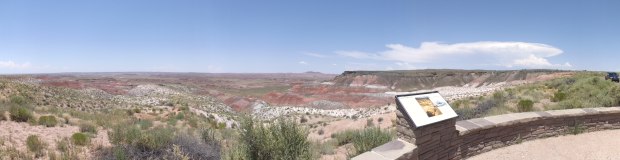
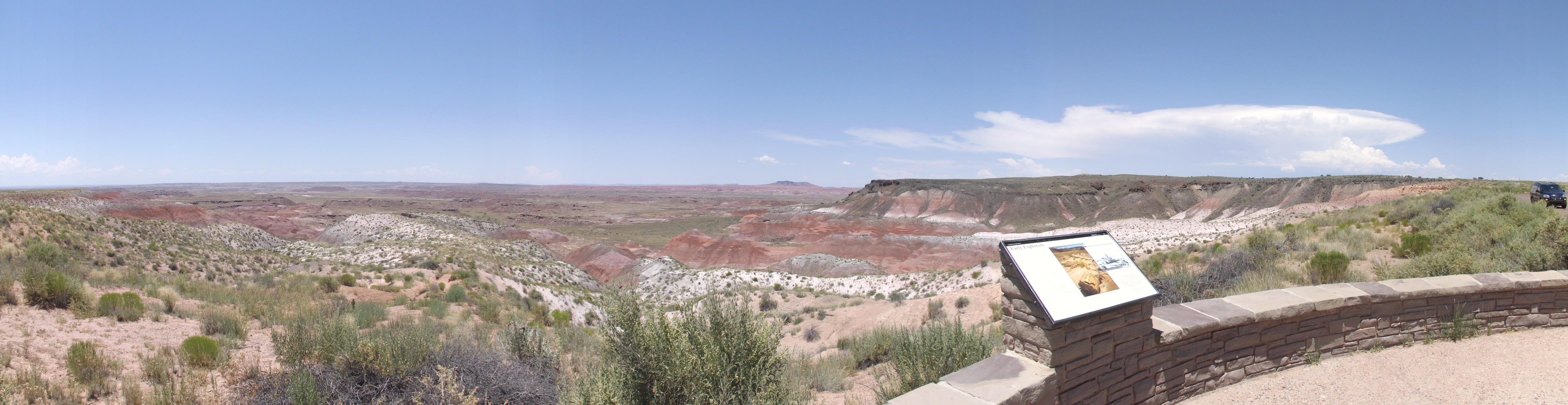
Painted Desert

Making Mountains out of Mountains

Painted Desert

On the way home, and not precisely the mountains, but not far from them.

I grew up surrounded by mountains, in the valley between the Rockies and the Owyhee Mountains. The rain shadow meant that what wasn’t irrigated was dry. Getting sagebrush and crops in the same frame of a photograph wasn’t too hard. Most of all, though, I remember mountains lining most of the horizon, especially on clear days. The thing is that I haven’t lived in Idaho for many years. Central Texas is, thank the FSM, far less flat than Northwest Ohio, but I still hadn’t been around mountains for a long, long time.

That changed on a recently-completed road trip. Along with the family, I did a three-day drive from Texas to California. At the end of the first day, closing in on Albuquerque, we reached the mountains. The sun was drifting down toward them. We rose up from the scrub plains to meet it.

A tangle of emotions followed—the sight of the mountains filled me up. They were a homecoming, but there was also bitterness there. It had been so long not just since I had seen mountains, but since I’d thought about them. It felt like I had betrayed my memories. Added to that was recognition of time’s passage. I had to convince my daughter that we were driving into mountains even though they were not pointy and white-capped like they are in her picture books. All this spun out from and coiled around the more usual beauties of mountain sunsets and the fatigue of a long day on the road.

Travel has always been a time for me to write—or at least to think about my writing. During the trip, I managed to (finally!) finish my read-through of Ghosts of the Old City. There is a lot to improve, especially in the first half of the book. It still has NaNo-wrought passages that don’t do anything. There are—well, I could spend a good chunk of time listing the things that need fixing. Mostly, the things that need to be fixed need to be more themselves, to reflect my understanding of the characters, story, and setting at the end of the process rather than what I was making up as I went along.

You never want to make mountains out of molehills. As a writer, though, you need to be able to make mountains out of mountains. The big things in your story have to feel big. The important things must feel important. Even after thinking about it for a week, I’m not sure I’ve done a good job of describing exactly what I felt when I saw the mountains. If it were important to my story, I’d have to find a way: more words, better words, fewer words…more details and less abstraction.

These are all things I’m doing as I work on my rewrites. Much of it comes back to the fundamental: show, don’t tell. If you can’t do that, your mountains will be flat and pointy against the horizon, capped with white that was never snow. And how is that going to make anybody feel anything?

Reflections on a First Teaching Year, Part Two

The last post included some of the odds and ends of my first year of teaching—unexpected moments and ongoing background stories. This week, some of the more challenging parts of the year.

Commuting Sucks

Austin has bad traffic, yo. And I got to spend 8-10 hours a week sitting in it. Once in a while, 12.

It Doesn’t Stop

This, I think, was the bit I was least prepared for. Teaching is a job you cannot leave at school. It takes up space in your head. It eats up time you’re nominally not at work because there are lessons to plan and papers to grade. I’m not going to pretend that I was working sixty-five or seventy hours a week, because there were serious inefficiencies in my time usage. Especially in the fall, though, it felt like 65 hours a week. (In actuality, it is usually about 50.)

Teaching college, you’re working with adults. Young adults, yes, who often need help, but adults. You’re responsible for getting them the content of your course, and sometimes for some professional mentoring. You are not, as a professor, responsible for the students themselves. You bring home papers to grade. You have lessons to plan. You may worry about certain students. It’s much rarer to worry about whether they’re actually going to make it to adulthood with a reasonable chance of success.

Teaching middle school, that worry is constant. You’re not actually a parent to your students, but you worry about them in much the same way, whether you’re at school or at home.

My First All-Nighter Since Grad School

At the end of the first semester of my doctoral program, I discovered that it does, in fact, take longer to write a 20-30 page paper than the 10-12 page papers I’d written during my master’s. The upshot of this was a sleepless night, serious heartburn from midnight coffee, and (probably) some mediocre papers. While I had short nights during my other finals weeks, I did not again have one in which I called a 20-minute doze enough.

…until third quarter grades were due.

I don’t like grading. I understand that grades have uses. Importantly, they’re a structure that keeps students accountable. Work that’s not for a grade usually doesn’t get done. None of that means I like grading. Because I dislike it, I tend to put it off. (Building grading into my schedule and getting it done sooner is one of my main goals for next year.) When I put it off…I get to spend an evening…and a night…and a morning catching up on grading. It was complicated in the third quarter by some inclement weather days and the usual mess of students turning things in late.

Next time I’m up all night, I really hope it’s for something more entertaining than middle school essays.

Perpetual Emergency

Standardized tests have higher gravity at low-SES schools. The administrative response to this was to declare an emergency in February that never really went away. Students at risk (or at perceived risk) of failing their STAAR tests were pulled every which way but loose.

My interventionists and inclusionists were rescheduled so many times that, occasionally, nobody in the building knew when they were actually supposed to be working with my students. On a related point, I had no input on most of the changes, including which students would be pulled. The situation was spectacularly frustrating for everybody involved.

Between the time that the scores for the reading test came back and the re-test for students who failed, I had a number of students who received three hours of English intervention every day. Because of the way that intervention was scheduled, I did not see some of my students at all for five weeks. A few of my other students spent half of their days doing only English (three hours in the morning with the interventionist, 90 minutes with me for normal class time, and 90 minutes of previously scheduled reading enrichment).

On a related note, I was asked to sacrifice some of my ELA time for students to practice for the STAAR science test. I did not especially mind this, because it was swapping one technology mandate for another—they went from working on the digital reading learning platform to the digital science learning platform.

We spent almost half the year in an “emergency.” It reminds me of this SNL sketch about terrorist threat levels.

Did I Mention the Testing?

Even assuming that we can get students to do meaningful work in the afternoon when they have been testing, I lost about 14 days of instructional time to actual and practice testing. Get rid of that useless assumption, and it’s more like 20. Then add to that a few days that were mostly lost because I taught at 5-12 school and we spent a few days sequestered because of high school testing. It adds up quickly. The tests interrupt instructional time, make it harder to complete meaningful projects, and stress everybody out.

The only people I’ve heard enthusiastically defend the amount of standardized testing we put students through are politicians and testing companies.

You See Failures Immediately, and Successes (Mostly) Later

I can’t tell you the highest quarter grade I gave this year, but I can name every student who failed part of my class, and every student who is doing summer work to try and get to high school after failing standardized tests. The class with the discipline problems occupies more headspace than the one where most students are well on their way toward college. The students who keep you up at night are the ones you’re still trying to figure out how to help…or the ones you worry about not being able to help at all. As a teacher, you just have to wait and see…and often you don’t get to see.

Next: the fun stuff.

Reflections on a First Teaching Year, Part One

Friday, I turned in keys. I turned in the laptop and bag that have kept me company on most of the 9,000-plus miles I’ve commuted since late September. I gave a few bags of miscellaneous inherited office supplies to the secretaries up front. I made an enormous pile of desks and shelves and cabinets in the middle of my room, because apparently my school plans to start summer by repainting the walls. I signed more shirts than yearbooks, and said numerous goodbyes to colleagues and students.

…and that was that. I had survived my first year of teaching full time.

My first thought is to say “Oh my FSM, was it hard.” It was hard. There were a few days I came home and cried. There were others that I definitely wanted to. More numerous were the days I just came home exhausted. Spending your days surrounded by the raucous emotional tumult of thirteen and fourteen year olds is tiring on its own, never mind trying to get them to learn something.

I’ve posted before about how much energy I put into splashing rather than propulsion. That got better as the year went on. I got much faster at planning lessons. I figured out which students needed which kinds of warning to get them to actually be quiet. With the help of my awesome co-workers, I got better at sorting bureaucratic necessities from bureaucratic niceties. I got (slightly) better about putting off grading too long.

There was testing. So much testing. The scheduling of said tests invariably worked out so that I spent the most time with my most challenging section, trying to keep them doing something productive on days when all of us were already tired and cranky. The test scores came out okay—I surpassed the goals my administrators set and almost all of my eighth graders will get to start high school in August.

Part Two will go into more depth about what was hard and what I learned about doing hard things. There was so much going on in the background, though, that became part of the year’s scenery…

—A fellow teacher’s transnational relationship trying to weather visa woes and the general hazards of long distance relationships.

—Pregnancies and house purchases.

—Repeated “opportunities” to be part of presentations various faculty and administrators gave as part of their work on master of education degrees and principal certifications.

—A surprising amount of faculty turnover as some people left and others came on to assist with the constant stream of “emergency” interventions that began in February.

—Students searching for novel ways to break the dress code, including one student who spent six weeks in a wig because she was told her (expensive) blue dye job violated school rules.

—Shifting patterns of students (especially the girls) ganging up on each other about self-proclaimed “drama.” This eventually led to a student being suspended for cyber-bullying, which of course kicked off a whole new cycle of shenanigans.

—On two different occasions, my class being disrupted because somebody decided English was the perfect time to ask out a crush.

—The surreal moment when I was listening to “Achy Breaky Heart” in Spanish while eating doner kebap while surrounded by teenagers.

—Racing my principal on an inflatable bungee run (at his behest) on what I believe was my ninth day on the job.

—Lines for the microwave in the teacher’s lounge.

—Chocolate-covered espresso beans becoming occasional life savers (and occasional crutches).

—Learning more than I’d ever considered there was to know about Mexican candy…and, to a lesser extent, Mexican pop stars.

—Tying somebody else’s necktie, and having to explain that it was only barely going to work because it was a child’s tie and too short.

—Explaining to a girl how to fix her bangs after she’d allowed another student to mangle them.

—Saying things in German just because my students asked me too.

—The time I danced at the dance I was chaperoning in exchange for a promise that a particular student would finish all of his missing homework.

—Explaining to students that it was not, in fact, cold. At all.

Of Joy and Being Led

It is the nature of objects in motion to stay in motion. We don’t always have to try and steer. 

Friday, I finally managed to get a handful of students outside for a preliminary bit of ultimate frisbee. This came after several explanations that there are not going to be “tryouts” unless we somehow conjure more than twenty people. We had…three.

While I was doing some pretty standard exercises to teach those three students to throw forehand, I had the opportunity to watch a bunch of other students playing soccer.

My school has good soccer teams. It’s one of the few positives we get to check on the list of “stereotypes you expect for a school with an 85% Hispanic student body.” We also have a terrible “field” that once had grass but is now a broad swathe of bare dirt surrounded by knee-high weeds. It’s dusty. It’s hard enough that even hard ground cleats won’t give you much purchase. One of the goals has been broken since February.

So that’s the scene: Anglo English teacher watching Latino middle schoolers play soccer in the dust. It’s that scene that goes somewhere in the first third of the inspirational movie (be it a sports or education movie). Maybe I’d be played by Kevin Costner.

Here’s the thing: they didn’t need me. At all. Soccer practice had been cancelled, so there were no coaches on hand. The students had one goal. They were playing a free-for-all scrum that involved yelling at each other in English and Spanish (and with more profanity in both than they’d admit) and occasionally claiming to represent (or claiming somebody else represented) countries from Chile to England.

And they were happy. Joyful. I see many emotions as a teacher: pride, resentment, happiness, fear, anger…I do not often get to see joy, the pure exultation in the moment.

Part of it was kids being kids, of course. Freshly-minted teenagers need to play, and they don’t generally play around the people who assign them grades or decide whether they get to start the next game. They don’t even necessarily play when they know they have an adult audience. The students were ignoring me, which I’m sure helped them to be happy. (No comment on whether the same applies in class.)

Aside from the contact high of being around the really happy, though, watching the middle schoolers play their game made me think of this blog post. (Mr. Rad’s blog is fantastic. It also makes me pine a bit for Minneapolis.)

My school is a charter. It comes with uniforms for the students and a laundry list of things for which they can get positive or negative points. (I sometimes wish they had houses so I could actually say “5 PRS for Gryffindor.”) We have block scheduling. The default assumption is that the students will sit quietly whenever asked, for whatever portion of 90 minutes the teacher requires. They have a painfully short lunch break. They spend a ton of time being told what to do and, more often, what not to do. Some days that seems necessary to get the 28 thirteen and fourteen year-olds I have in my room pointed in the same direction and learning. I try my best to give the students opportunities to speak, to each other and to me. I try to listen  .

The striking thing about “Mr. Rad’s” post, though, is that he calls for getting beyond listening. He calls for us (meaning privileged white males) to be led. That’s a much, much harder thing. Listening can be a passive process. When you’re listening, it’s easy to do so selectively (ask any teacher). Being led, though, requires active following. It requires more than Bill Clinton’s “I feel your pain.” It means going beyond “How can I help?” to “What needs to be done?” and even further to “What do you want me to do?” It’s hard. It’s hard as a teacher who’s pushed to wield authority. It’s hard as somebody for whom society has been built.

For me, that meant going over and inviting (and only inviting) the kids playing soccer to try ultimate. A few of them did. We had a game that was about as slapdash as you’d expect on a short field with five of the six players involved unable to throw a forehand more than ten yards. Most of the kids, though, stuck with their soccer game. We played around them. After five or six extremely long points, the soccer players who’d been playing ultimate went back to playing soccer. They invited me to play, too, and I tried for a bit.

They didn’t need me, though. Not there. They were doing fine without my help. Isn’t that what we aim for as educators?

Research Questions

In this penultimate unit of eighth grade language arts, we are studying research. “Research” for these kids usually consists of pulling out a smartphone and asking Google (or Siri) a question. YouTube was in almost all of their lists of “five places to get information.” When I showed them a video about the Library of Congress main reading room, many were skeptical about there being that much that isn’t available online.

This has been a fun unit for me to teach, in part because I’ve taught variations on “how to write a research paper” more than just about any other topic. The key, I think, is getting students out of the idea that research is just looking stuff up. Research is really one way of answering a question. It often involves looking stuff up, but it’s the question that’s important. I let the students choose their topics, but guided them pretty closely in the development of those questions. They are sick of me asking what their research question is…and probably also sick of the dirty looks I give them when they can’t remember it.

Of course I was going to bring my dissertation in for them to look at. It’s a big stonking book and I wrote the whole thing. I researched it all. I found almost everything in the bibliography myself. If nothing else, it would give me something to hit back with when the students inevitably complained about the number of sources they needed to find.

It helped that the kids were interested in New York and the library with the lions and in their teacher more generally. They got to hear about novelties like “newspapers” and “microfilm.” I got to explain that some of the things I looked at had to be brought up from basements. In boxes. (In their defense, if you’ve had Google in your pocket for most of your living memory, the notion of getting paper files from boxes somewhere sounds a little bizarre.) The students were mostly suitably impressed, and I held their attention for one more day—a victory when the standardized test is over and you’re obligated to hold their attention for another six weeks.

Because I didn’t want to be switching back and forth between the document camera and my laptop, I went and looked at the page for my dissertation at the University of Minnesota digital conservancy.

It’s been downloaded nearly 200 times since January 2014.

I sincerely doubt many of those folks have read the whole thing. It was still a surprising discovery. I was perversely satisfied to know that somewhere out there, desperate undergraduates might be plagiarizing my work. It was the sort of quasi-immorality, I thought, that I probably deserved. I managed to squeeze in a lot of things that would come up in searches: a bunch of prominent 20th century American composers, the New York Philharmonic, Pierre Boulez, Pierre Bourdieu… Plenty of places for an enterprising young person capable of using Ctl-F to grab a paragraph or two.

That was going to be the whole story—how I like to teach people about research, because research is about answering questions, and I want more people to be more curious. I want more people to feel equipped to look for their own answers. I want more people to actually be equipped to sort out reasonable answers from poorly-argued or unsubstantiated ones. And how I thought it was funny and a little flattering that somebody might plagiarize my dissertation for an undergraduate research paper.

Then I got a serious message about my dissertation…on Facebook. (Which just goes to show that my students’ constant claim that “Facebook is for old people” isn’t so off base.) A former professor of a former colleague had been reading it, and thinking about it.

That’s a different kettle of fish. That’s what the dissertation was meant to do. It was meant to be part of scholarly discourse, to contribute to human knowledge (in a minuscule way). At a moment where I am putting myself on a job market very different to the one in higher ed, one where I am trying to figure out ways to talk about how well my students did on their standardized tests without sounding like I care too much about the standardized tests…that message hit me. That’s what I left behind. The reasons that I did still hold true, even as a few more of my former colleagues get fingertips in doors with longer-term and even a few tenure-track appointments.

It’s a reminder that I was good at what I did. I wish that it could remind me of that without simultaneously poking at old scars. I’m sure that in a day or two I’ll be over it. I know (thank the FSM) that this is being bumped in mid-stride, not anything that’s going to really change my direction. It’s just enough to throw me off balance for a moment.

Still. Academia, man. It gets its hooks into you but good…

Song of the Year, 2014 Edition

Around this time last year, I picked my 2013 song of the year—not the song that I listened to the most, nor the song that I liked the most, nor that annoying ear worm that never goes away (looking at you, Meghan Trainor and every song from a certain wintry Disney film). No, my “song of the year” is the song that encapsulated the year for me. The woeful dissertation-finishing/academic job-hunting year of 2012’s song was “Poor Wayfaring Stranger”—a lonely song for a lonely time. I followed that up with The Replacements’ “Unsatisfied” for 2013—another year adrift and trying to figure out what the hell to do with myself, a year of unemployment, transitions, and unhappiness that I managed only intermittently to stave off.

So. What was 2014’s song? Like 2013, it was a year of transitions. I spent the spring in long-term substitute jobs, falling back into love with teaching. I spent the summer going through a teacher certification program and, um, buying a house. In September, I got the first full-time, regular-paycheck-plus-benefits job I’ve had since 2006. The weekend before I started that job, I finished the draft of Ghosts of the Old City. House! Job! Novel! A lot of good things happened in the latter half of 2014.

Here’s the song that goes with them: The Decemberists’ “This is Why We Fight” from The King is Dead.

(No, I do not quite understand why the post-apocalypse despot is young, white Prince.)

For the first time in half a decade, I felt last year like my work was getting me somewhere. It was not what I’d spent all those years in graduate school preparing for, but there’s not much use in crying over spilt time. Although it sounds contradictory, I think I no longer regret chasing my PhD despite wishing that I hadn’t done it. The emotional weight has diminished. (See also: the idea of detachment I wrote about here.)

“This is Why We Fight” is not valedictory, and I don’t really think my 2014 was either. The house, the job, the (draft!) novel…those are not prizes that I won. They’re not some kind of belated justification for the effort I’ve put into my various endeavours. They’re a side effect, one that I greatly appreciate. They’re things that I could not possibly have done without the support of many wonderful people in my life.

Which brings me back around to “This is Why We Fight”: those people, and all the other people I interact with. My kids. My students. My family. My friends. That’s why I fight. That’s why I put up with the commute. That’s why I keep going back to students who have called me names and blown me off and, in one case, written an essay about how much they dislike me.

When we die
We will die with our arms unbound
And this is why
This is why we fight

The song’s lyrics are simple. The video—which I hadn’t actually seen until I started this post—is evocative and takes fighting literally (although there’s much to be made of starting a revolution with a white flag). Simple lyrics, though, delivered with Meloy’s emotion and the whole band’s driving instrumentals, make me think of all the reasons that I fight. This is one of those songs that hits me, that can make me tear up the same way I do when I get to tell students how well they’re doing, the same way I did yesterday when my son earnestly told me that maybe he would go to work in government so he could help create justice.

That’s why I fight. That’s one of the things I figured out in 2014. It’s what keeps me going in this young year.

Finity

Embed from Getty Images

Humans are bad swimmers.

The shape of our bodies lends itself to climbing trees, running long distances, using tools…and creating lots of turbulence when we propel ourselves through the water. Even Michael Phelps expends a fair amount of energy that doesn’t move him forward.

Being a first year teacher is like learning to swim: you splash and flounder and far, far too much of your energy is spent on turbulence rather than propulsion. You’re inefficient—dreadfully inefficient—but you’re in deep water so you don’t really have much choice but to keep swimming. You expend enormous amounts of energy on the little things: keeping track of papers, filing lesson plans, attending meetings. Then, too, there are the more important things that aren’t directly part of teaching content: classroom management, staying on the same page as your administrators, understanding how the standardized tests work. It’s all turbulence and splashing. There is not, as a first year teacher, that much energy left over for propelling yourself and your students toward actual content knowledge.

We do it anyway, though. How could we not? We love our students. Whether we’re fresh out of school or fresh out of an alternative certification program, we’re teachers because we care about the work. We can wear our cynicism about the system for everybody to see, but it hasn’t had time to deepen and become bitter. We give teaching everything we’ve got.

Here’s the thing, though: that extra energy? It has to come from somewhere. Whitman wrote “I am large, I contain multitudes.” First year teachers put most of our internal multitudes to work on teaching. We get a little boring. We do things like eat raw almonds for lunch because we didn’t make it to the grocery store or because we were thinking hard about the day’s lessons and forgot to pack a proper meal. We don’t get enough sleep. We have to remind ourselves that our kids at home are not our students. Sometimes, we have to hunt down that one of our multitude who washes dishes and does laundry. (That one is really good at hiding.)

Our multitudes are finite. Our energy is finite. For me, writing is one of the things that slipped for a while. NaNo was a bit of a train wreck—I didn’t have a plan when I started, spent the first weekend writing some game stuff, and was still at zero words of actual draft two weeks in. By the end of the third, I decided that continuing to gun for 50K was not going to be at all fun, so I stopped. I did write a few thousand words more before November was out, but it was back to writing for fun. There will be Camp NaNo in April and in July, and (shockingly) I don’t require it to be NaNo to write.

I do require time and energy. I have to find space in the finite. I have to decide, day to day, whether I’ll get more out of washing dishes or writing a few paragraphs, whether to spend a spare twenty minutes jotting down ideas for lesson plans or character development (or sleeping). I have to remind myself that I’m more likely to waste time playing games when I’m tired, and that those twenty minutes would almost always be better spent sleeping.

And teaching never really goes away. It’s nearly as bad as grad school for thoughts of “I should be working” lurking always in the back one’s mind. It doesn’t feel as much like being stalked by a monster as the dissertation did, but it still takes a remarkable amount of headspace. There are constantly things to fix, different points to emphasize, procedures to tweak to make things run more smoothly. I think about particular students. I think about particular lessons. I try to figure out different ways to explain things to my ESL and SPED students…and how to give my GT students something that will actually make them think. Teaching, like art, will fill as much space as you give it.

Finity is a bitch. But I’m learning to be a better swimmer.